
Sayuri’s Passage from Chiyo to the Chairman’s Companion
Memoirs of a GeishaThis thread traces Sayuri’s transformation from a displaced fisherman's daughter into a celebrated geisha, and the costly choices through which she reaches the life she desired.
increasing Bearing strength in each event
 decreasing
Bearing strength in each eventdecreasingThe Girl from Yoroido
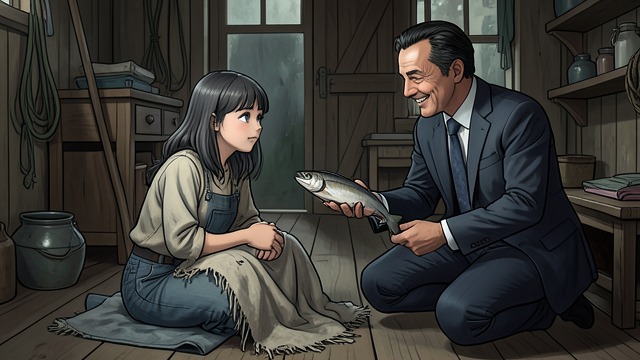
A Childhood Cut Short
The fishing village
Chiyo grows up in a leaning house above the Sea of Japan, with her older sister Satsu and their ailing mother. Her unusual gray eyes and alert imagination distinguish her from the people around her, while her father’s age and poverty make the household’s future precarious.
A chance encounter
After a fall brings her to Mr. Tanaka’s seafood company, his notice feels like the first opening onto a larger world. His kindness and elegance captivate her, though she cannot understand that his decisions will separate her from her family rather than rescue them together.
That mixture of wonder and danger defines the beginning of Chiyo’s fate: she is perceptive enough to imagine another life, but too young to see how little power she has over the adults arranging it.
A Maid in the Okiya
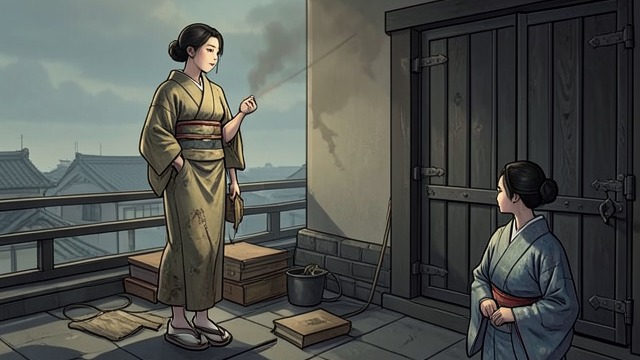
Confinement in Gion
Debt and separation
Mr. Tanaka sends Chiyo and Satsu to Kyoto, but the sisters are separated at the entrance to the okiya. Chiyo is placed under the authority of Mother of Nitta Okiya, where her labor, lessons, clothing, and acquisition are entered as debts she must eventually repay.
A damaged opportunity
Hatsumomo turns Chiyo’s curiosity and dependence against her, first by making her ruin Mameha’s kimono and later by framing her for stealing an emerald brooch. Chiyo’s failed attempt to escape over the roof leaves her with a broken arm, mounting debt, and the loss of her training; she becomes a maid instead of an apprentice.
The collapse of her first hopes forces Chiyo into isolation. When a letter from Mr. Tanaka confirms that both parents have died and Satsu has disappeared, the possibility of returning to her old life finally gives way to the necessity of surviving in Gion.
The Chairman’s Sign
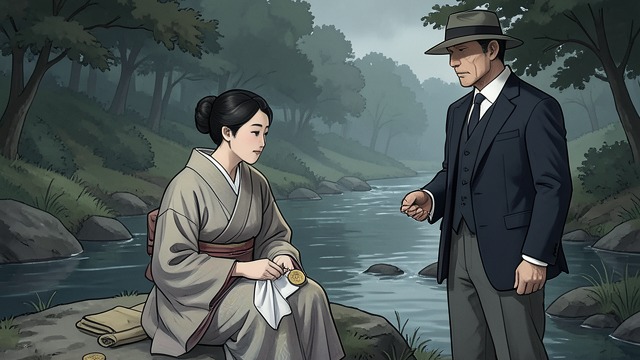
A Future Chosen
The encounter by the stream
After her family’s deaths, Chiyo feels that her life has no direction. A kind encounter with the Chairman beside the Shirakawa Stream changes that: he gives her a coin and a handkerchief, treating her as a person worthy of tenderness rather than as a servant to be dismissed.
Purpose through performance
Chiyo takes the encounter as a sign and decides that becoming a geisha could bring her close to the Chairman again. When Mameha later notices her potential and arranges her return to lessons, the path is not a simple rescue: Chiyo must obey strict terms, endure Hatsumomo’s sabotage, and learn to turn her attention and discipline into professional skill.
The Chairman’s kindness becomes the private purpose behind her public transformation. She works toward a future she cannot control, converting childhood longing into a sustained ambition that gives meaning to otherwise punishing training.
The Making of Sayuri
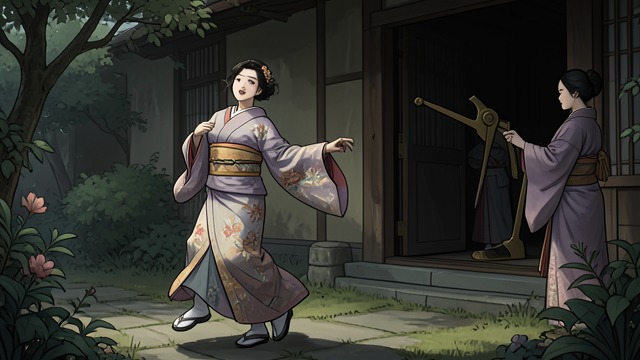
A Name and a Reputation
Apprenticeship regained
With Mameha as her older sister, Chiyo returns to the school and studies dance, music, manners, and the carefully managed art of entertaining. Mameha guides her through Gion, lends her distinguished kimono, and uses appearances and introductions to make the once-obscure girl known.
Public success and private cost
Chiyo debuts as Sayuri, and her unusual eyes, dancing, and growing reputation draw notice. Her mizuage brings a record-setting payment and leads Mother of Nitta Okiya to adopt her, making Sayuri the okiya’s heir while tying her earnings and professional identity more firmly to its interests.
Her rise gives her security and standing, but it does not give her freedom to choose whom she loves. The training she undertook to approach the Chairman makes her valuable to the institution that manages her, and her success deepens the tension between achievement and self-determination.
A Life Beyond Gion
Choosing a Different Shore
War and displacement
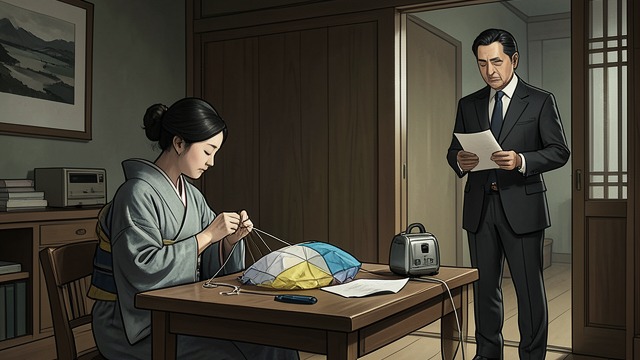
When the geisha districts close during the war, Sayuri leaves Gion and finds refuge with Arashino Isamu’s family, sewing parachutes and living amid scarcity. After the war, she returns to Gion at Nobu’s urging, but her survival has not erased her dependence on other people’s decisions or her longing for the Chairman.
Love and departure
Sayuri’s attempt to sever her bond with Nobu by arranging for him to discover her with the Minister goes disastrously wrong: Pumpkin brings the Chairman instead. The episode ultimately reveals Sayuri’s feelings, but it also makes clear that her choices have consequences for the friendship she hoped to preserve.
The Chairman becomes her patron, and Sayuri leaves her working life as a geisha behind. Later she establishes a small teahouse in New York, carrying memories of Gion, her family, and the people she lost into a new home rather than treating the past as something she can simply erase.
Around age nine, before leaving Yoroido
From age nine through the first years in Kyoto
Around age eleven, after learning her parents have died
From her return to training through age fifteen
From the wartime closure through the later years in New York
